A name that appears in the margins, but never feels minor
I keep coming back to Loralee Czuchna because her story resists the usual celebrity template. Some lives are written in blazing capital letters. Hers reads more like handwriting in the edge of a photograph, easy to overlook at first, then impossible to forget once you notice it. She is known publicly through her marriage to Don Knotts and later through her connection with Dr. Howard Murad, yet that narrow frame does not hold the whole shape of her life. What interests me most is the contrast between public visibility and private reality. Loralee Czuchna seems to live in that tension, where a person can be widely recognized and still remain deeply unreadable.
That kind of existence has its own gravity. It is not the gravity of a stage performer, where every gesture is amplified. It is the gravity of someone who stands near the flame, warm enough to feel the heat, but never consumed by it. In a culture that often confuses fame with significance, Loralee Czuchna reminds me that some lives matter precisely because they are not built for display. The public may know a few landmarks, but the road between them stays mostly unlit.
The shape of a public life built around association
What stands out first is that Loralee Czuchna is not known for a long public career in entertainment, business, or politics. She is known through relationship, and that fact changes how her story should be read. Being linked to a famous spouse can flatten a person into a footnote, but it can also reveal something larger about how modern memory works. People often leave the clearest trace not through the work they do under a spotlight, but through the lives they share with others who are more visible.
Her marriage to Don Knotts places her inside one of the most recognizable comic legacies in American television. That period gives her a permanent place in the family story, including her role as stepmother to Knotts’ children. It also means she occupied a domestic space that many outsiders can imagine but never truly know. A home shared with a public figure can feel like a theater after the audience has gone. The costumes remain. The laughter lingers. The real conversations, the ordinary hours, the small frictions of daily life, those are the things that never reach the marquee.
Later, her public association with Dr. Howard Murad adds a second chapter, and the contrast is striking. The earlier chapter belongs to old television history and classic American comedy. The later one is connected to wellness culture, entrepreneurship, and a more contemporary kind of public life. That shift alone is interesting. It suggests a person moving through different social worlds without becoming owned by either one. I find that quietly elegant.
Why unfinished biographies often tell us the most
There is a temptation to treat missing details as a problem to solve. What was her exact birthdate? What were her early years like? What career ambitions did she have before she entered public view? Those are natural questions, but the absence of public records is also a kind of information. It tells us that Loralee Czuchna did not build her identity around exposure. She did not leave behind the kind of dense public trail that makes biography feel simple. That silence matters.
I think there is dignity in being partially unrecorded. Not every life needs to be converted into a searchable archive. Some people leave behind a bright, narrow beam of documentation and then retreat into the deeper weather of ordinary existence. That does not make the life less real. It makes it more familiar, in a way. Most human lives are mostly undocumented. We just forget that because the internet rewards oversharing and punishes ambiguity.
Loralee Czuchna also raises a broader question: what counts as a public life? Is it acting credits, interviews, financial disclosures, and official profiles? Or is it the way a person appears in another person’s story, shaping the emotional architecture around them? I would argue it is both. In her case, the record may be sparse, but the impression is durable. She appears in the cultural memory as someone connected to two different kinds of public identity, and that connection is enough to make her story worth examining.
Family, memory, and the quiet labor of being present
The family dimension of Loralee Czuchna’s life is especially revealing. Marriage is not just a legal fact. It is a daily practice of alignment, adjustment, and patience. When one partner is already a well-known figure, the other often becomes the unseen coordinator of everything else. The social calendar. The private mood. The unglamorous reality behind the smile in the photograph. That labor rarely gets applause, but it shapes the atmosphere of a household as surely as weather shapes the coastline.
Her role as stepmother adds another layer. Step-family relationships often require a special kind of emotional intelligence because they are built rather than assumed. They do not arrive fully formed. They are negotiated, revised, and sometimes quietly strengthened over time. That makes them one of the more human parts of any biography. They ask for flexibility, and they reward restraint. Loralee Czuchna’s place in that family structure suggests a life that was relational long before it was public.
Later, the repeated references to her as Murad’s wife or partner imply another kind of kinship, one that likely connected personal companionship with public appearances and shared social circles. I do not read that as a footnote. I read it as evidence that her life moved through layers of intimacy, each with its own rhythm and expectations. Some people are defined by a single role. Others move between roles so smoothly that the outside world only catches fragments. She appears to belong to the second group.
The meaning of visibility in a photograph-driven age
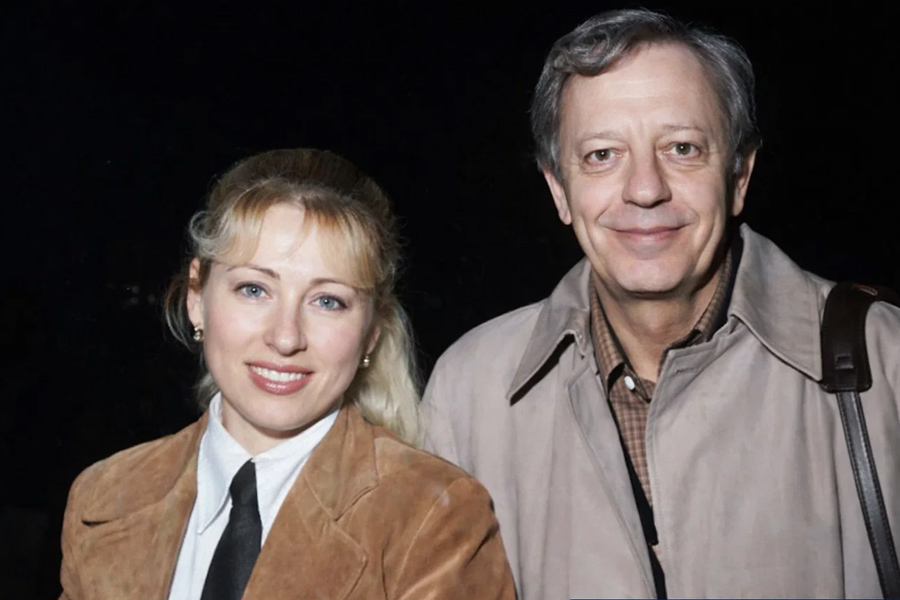
Photographs do a strange thing to memory. They freeze one moment and make it look like a summary. A single image can suggest a whole relationship, a whole personality, even a whole era. But the frame lies by omission. It captures posture and expression, not routine. It shows proximity, not depth. That is why Loralee Czuchna interests me so much in the context of photographs and public mentions. She is visible enough to be remembered, but not so exposed that the image becomes all there is.
There is something almost cinematic about that. I picture a sequence of stills rather than a full film. One image beside Don Knotts. Another beside Murad. Another at an event, dressed for an occasion, composed and self-contained. Between the images, the story breathes. The missing scenes are not empty. They are where private life continues doing what private life always does, which is everything that never makes the caption.
In a different era, someone like Loralee Czuchna might have been remembered mostly through family albums and neighborhood stories. Today, the internet keeps a thinner but wider record. It preserves mentions, repetitions, and small biographies that drift across websites like leaves on a current. That means her public identity persists in a scattered but recognizable form. Not a blockbuster narrative. Something subtler. A trail of references, each one confirming that she was there, and that being there mattered.
Public identity without overexposure
I am drawn to people whose stories remain partially protected. There is a temptation to assume that a fuller biography would automatically be a better one, but that is not always true. In Loralee Czuchna’s case, the lack of an expansive public career may actually sharpen the interest around her. It leaves room for interpretation without forcing invention. It lets the known facts stand with more force.
The known facts are already enough to suggest a life of movement between worlds. Hollywood history on one side. Wellness entrepreneurship on the other. Family connection in the middle. Private life underneath all of it. That arrangement feels like a bridge built over deep water. You can see the crossings. You cannot see every plank.
What I take from her story is not simply who she was married to, but how she seems to have occupied the spaces around fame without becoming theatrical about it. That restraint has its own style. It is not the style of the red carpet. It is the style of a person who knows that visibility is fleeting, but presence can endure.
FAQ
Was Loralee Czuchna mainly known as a public personality?
Loralee Czuchna is best known through her relationships rather than through a large independent public career. Her name appears most often in connection with Don Knotts and later with Howard Murad, which gives her a public identity shaped by association more than performance.
Did Loralee Czuchna have a visible entertainment career?
There is no widely documented mainstream acting career attached to Loralee Czuchna. Her public trace is more social and relational, appearing through photographs, retrospectives, and references connected to the people around her.
What makes Loralee Czuchna interesting to write about?
What makes Loralee Czuchna compelling is the contrast between visibility and privacy. She is recognizable enough to appear in public memory, yet understated enough that her story leaves space for interpretation. That combination gives her biography a layered, understated texture.
How should I think about her role in family history?
I think of Loralee Czuchna as part of a family story that spans different eras and public worlds. Her marriage to Don Knotts placed her within a classic entertainment legacy, while her later life connected her to a different kind of public presence through Howard Murad. She seems to have moved through those spaces with quiet steadiness.
Why is there so little public information about her early life?
Some people leave behind a small public record by choice or by circumstance. In Loralee Czuchna’s case, the available information is limited, which suggests a life that was not structured around self-promotion. That scarcity is part of the story itself.
Does Loralee Czuchna’s story say anything broader about fame?
Yes. Her story shows that fame often depends on the people around it as much as on the person at the center. It also shows that a life can be meaningful even when it is not heavily documented. Sometimes the most interesting lives are the ones that stay partly in shadow.
First Grade Writing Adventures That Turn Ideas Into Words
The Attic Is Secretly Running Your Roof
The Smart Womens Wardrobe That Works Overtime