Takeaways
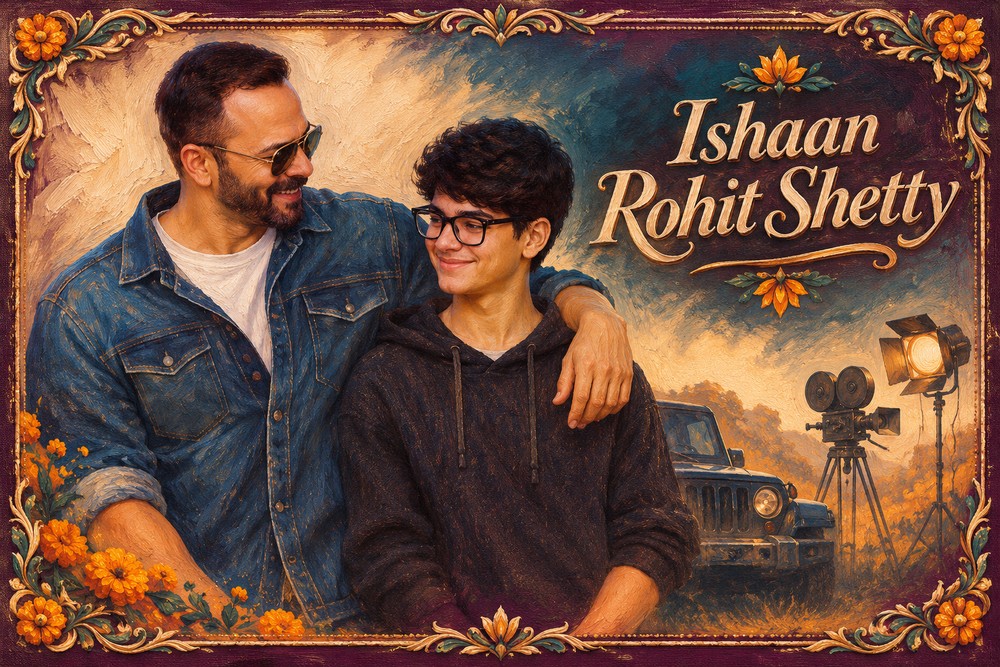
Ishaan Rohit Shetty has attracted attention as the son of Hindi-film director Rohit Shetty, but he has largely remained outside the spotlight. The profile of Ishaan Rohit Shetty describes him as a young person growing up around film production and beginning formal study in filmmaking. Exact details such as his birthday are not consistently established in public sources. The Indian Express report on Rohit Shetty’s background and advice to his son offers a useful perspective on his father’s stated wish that he learn the craft from the ground up.
Rohit Shetty’s film career is built around action, comedy, and large-scale spectacle. His popular work includes the Golmaal films and a series of police-centered movies. This context means Ishaan has had unusual proximity to sets, actors, cameras, and production crews. Proximity, however, is not the same as a completed career. He has not yet built a public filmography comparable to his father’s, and writing about him should preserve the difference between training and professional achievement.
The source connects Ishaan with Central Film School in London, where he reportedly studied filmmaking. Formal study can provide technical grounding, but film work is collaborative and practical: students learn about camera systems, editing, sound, story structure, production planning, and the responsibilities of a crew. A credential does not predetermine what someone will do later. It is best described as part of his education rather than proof that he has entered a particular profession.
Rohit has publicly said he wants his son to start from scratch rather than rely on family access. The Indian Express coverage captures this sentiment and places it within the wider culture of film dynasties. The statement suggests a parental emphasis on learning and earning credibility, though it should not be expanded into claims about private family rules or the father’s exact plans for his son. Public comments give a window, not the whole household.
The Shetty family’s cinematic history reaches back to Ishaan’s grandfather, M.B. Shetty, a stunt performer, action choreographer, and actor. Stories about his work point to an era when stunt professionals often performed dangerous physical tasks with fewer modern protections. His legacy can explain why action filmmaking has a special place in the family narrative. Yet a relative’s achievements do not obligate Ishaan to repeat the same career or to inherit a specific style.
Rohit himself began with practical film work and built a directing career over time. His path is often invoked to explain his advice to Ishaan: understand how a set functions and respect the labor behind what appears on screen. This is a useful lesson about filmmaking generally. A movie depends on performers and directors, but also on camera, lighting, editing, transport, costume, safety, and production teams. Learning from the ground up can mean appreciating that network of skills.
Ishaan’s public appearances have mostly been in family or entertainment coverage. That limited presence is consistent with a young adult whose life is not yet a public career. Details about friendships, habits, finances, or private plans should not be inferred from photographs or brief mentions. As with any young person connected to a famous parent, a profile should leave room for his interests and choices to develop without assuming that a surname decides his future.
For now, Ishaan Rohit Shetty’s story is about inheritance and preparation rather than a settled body of work. He belongs to a family with a deep connection to Indian cinema, has reportedly studied filmmaking, and has heard his father emphasize practical effort. The next steps remain his to choose. A careful article can explain this environment without turning possibility into certainty or treating family access as either proof of success or a substitute for individual accomplishment.