A short portrait
Nora Negga does not appear in marquees or magazine covers. Her presence is quieter: hospital corridors, a small house in Limerick, the private work of raising a child after loss. Yet her life is braided with travel, medicine, cultural crossings and a singular family story that surfaces intermittently through the public career of her daughter. The following is a focused, date-rich account of what can be pieced together about Nora and the family she raised.
Basic information
| Field | Detail |
|---|---|
| Name | Nora Negga |
| Birthplace | Ireland (exact date and place undocumented publicly) |
| Profession | Nurse (including work in Ethiopia) |
| Spouse | Ethiopian doctor (surname Negga; deceased c. 1988) |
| Children | Ruth Negga (born 1981) |
| Major relocations | Lived in Ethiopia until c. 1985; relocated to Limerick, Ireland with daughter c. 1985 |
| Notable public appearance | Attended a portrait unveiling at the National Gallery of Ireland in 2025 |
Early life and nursing: a profession that carried her abroad
Nora’s life, as reconstructed from available accounts, reads like a short travelogue stitched to a domestic chronicle. Born in Ireland (no public birth date available), she trained as a nurse and—by the late 1970s or early 1980s—took her skills to Ethiopia. There she worked in a hospital environment that brought her into close contact with local medical staff. It was in that setting that she met an Ethiopian doctor with the family surname Negga.
Numbers anchor this chapter: 1981 is the year their daughter, Ruth, was born in Addis Ababa. The early 1980s thus mark both Nora’s professional life abroad and the formation of a cross-cultural family. Nursing, in this telling, is less a résumé line and more a durable language: a practical competence that allowed travel, seeded relationships, and later supported single parenthood.
Family and personal relationships
| Family member | Relationship | Key facts |
|---|---|---|
| Husband (deceased, possibly Dr. Negga Mengistu) | Spouse | Ethiopian doctor; reportedly died in a car accident c. 1988 while still in Ethiopia |
| Ruth Negga | Daughter | Born 1981 in Addis Ababa; raised in Limerick following the family’s move; later became a well-known actress |
| Cousins (unnamed) | Extended family | A “big gang” of cousins in Limerick who formed part of the support network after the move to Ireland |
The couple lived in Ethiopia long enough for their daughter to be born there and to spend her earliest years—about four of them—before a return to Ireland around 1985. The interlude in Ethiopia, followed by relocation to Limerick, frames the family’s dual cultural identity: Ethiopian paternal roots and Irish maternal roots.
Approximately three years after that move—around 1988—the family suffered a major rupture. Nora’s husband died in a car accident in Ethiopia when their daughter was about seven. The immediate arithmetic is stark: Ruth born in 1981; moved to Ireland c. 1985 (age 4); husband dies c. 1988 (Ruth age 7). From that moment on, Nora is described as a single parent who did not remarry and who raised her only child in rural Limerick with considerable help from extended family.
Timeline of documented events
| Year (approx.) | Event |
|---|---|
| Pre-1981 | Nora trains and works as a nurse in Ireland, then travels to Ethiopia for professional work. |
| 1981 | Birth of daughter Ruth in Addis Ababa. |
| 1981–1985 | Family lives in Ethiopia; Nora continues nursing work. |
| c. 1985 | Nora and Ruth relocate to Limerick, Ireland (Ruth ≈ 4 years old). |
| c. 1988 | Death of Nora’s husband in a car accident (Ruth ≈ 7 years old). |
| 1988–2000s | Nora raises Ruth in Limerick with support from cousins; Ruth later studies acting and builds a career. |
| 2016 | Ruth discusses family background in multiple interviews and public appearances. |
| 2025 | Nora attends a portrait unveiling of Ruth at the National Gallery of Ireland. |
Public mentions and appearances
Public references to Nora are sparse and usually indirect. She is primarily visible through her daughter’s storytelling—interviews in which Ruth speaks of her upbringing, the move from Ethiopia to Ireland, and the death of her father. These recollections are the main repository of detail about Nora’s decisions and character: a woman who navigated international work, cultural transition and bereavement while ensuring a stable environment for her child.
Quantitatively, mentions of Nora in news or social media searches are rare; the pattern is that of occasional appearances tied to Ruth’s milestones. One documented public appearance took place in 2025, when Nora was photographed at an art-world event celebrating her daughter. Otherwise she remains a private figure, with no public profiles or documented awards connected to nursing or civic life.
The invisible ledger: career, finances and achievements
There is no public ledger of Nora’s professional accolades or financial status. Where public figures accrue lists of awards or net worth estimates, Nora’s trace is domestic and practical. Her nursing work included time overseas, which suggests both skill and adaptability; yet there are no recorded honors, no public fundraising campaigns, no organizational leadership roles attached to her name. That absence is itself informative: Nora’s life appears to be one of steady care rather than public accolade.
Numbers that could illuminate such a ledger—salaries, positions held, awards—simply aren’t available. What can be counted instead are life events, dates, and family milestones: the year of Ruth’s birth (1981), the years of relocation (c. 1985), and the bereavement (c. 1988). Those figures map a sequence of challenge and endurance.
Influence visible through another life
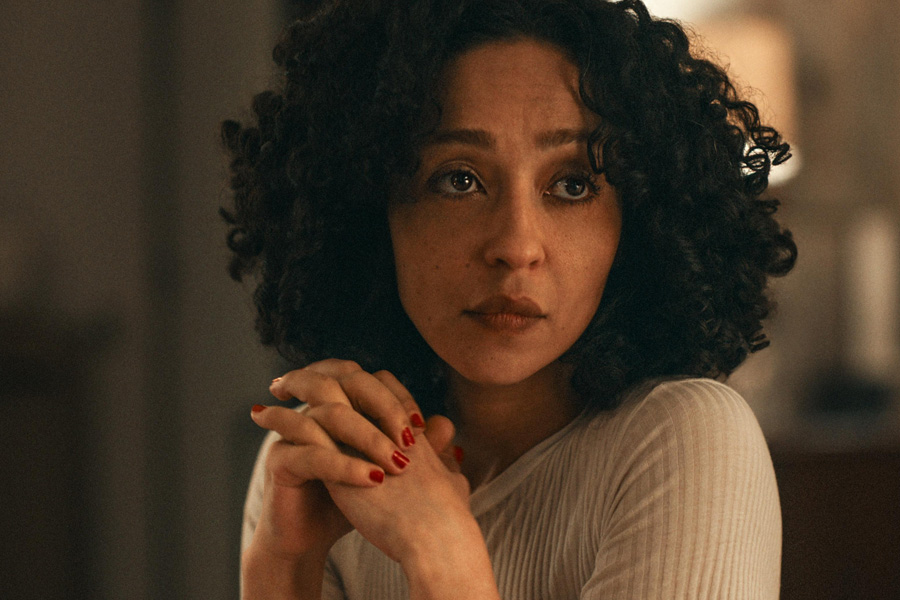
If Nora’s influence is mostly private, it is nonetheless visible in the contours of Ruth’s public life. Ruth’s upbringing—education, early moves, and eventual career in acting—occurred under Nora’s guardianship. The image that emerges is of a mother laying down rail ties: practical, steady, the necessary infrastructure for someone else’s travel. In interviews Ruth has described a childhood steeped in family support and resilience; the arithmetic of dates and the geography of two continents make clear how much of that story was shaped by Nora’s choices.
Records and gaps
The portrait assembled here has large blank spaces. Exact birth dates, early family background in Ireland, the full name and biography of Nora’s husband, and records of Nora’s nursing posts are absent from public view. These gaps are consistent with a life lived largely outside the spotlight. What remains are anchored facts and the human rhythms between them: one child born in 1981, a move roughly in 1985, a widowing about 1988, and a continuing life in Limerick punctuated by occasional public visibility in later decades.
Photographs, video and public memory
Direct visual records of Nora are limited. YouTube and televised interviews center on Ruth; footage of Nora herself is largely absent. Photographs surface sporadically—family snapshots and the occasional event image—but there is no sustained media dossier. Instead, public memory of Nora is mediated through narrative: stories told by her daughter, references in press coverage of Ruth, and the occasional public appearance that momentarily folds the private life into the public record.