Basic Information
| Field | Details |
|---|---|
| Name | Nell Breyer |
| Birthplace | Boston, Massachusetts (estimated 1970s) |
| Education | BA, Art and Humanities, Yale University; MSc, Cognitive Neuroscience, University of Oxford (Marshall Scholar); MS, Media Arts and Sciences, MIT Media Lab (2002); Doctorate of Design, Interactive Media in Public Space, Harvard Graduate School of Design (2011) |
| Primary Roles | Interdisciplinary artist, choreographer, researcher, scholar, executive director |
| Notable Works | Axial View (2006); Volume (2006); I:move (2007); The Disappearing Woman (2009); Where Lines Converge (Central Synagogue installation, 2022-2023) |
| Research Affiliations | MIT research affiliate, Program in Art, Culture and Technology; long-term projects at MIT Media Lab |
| Leadership and Advising | Executive Director, Association of Marshall Scholars; Advisor, Good Growth Capital |
| Public Writing | Contributor, Brooklyn Rail (2023 onward) |
| Family | Father: Stephen G. Breyer (born August 15, 1938); Mother: Joanna Freda Hare Breyer; Older sister: Rev. Dr. Chloe Breyer; Younger brother: Michael Breyer |
| Personal Life | Maintains a low public profile; no confirmed public records of marriage or children; photographed in 2011 with a child identified as Justice Breyer’s grandson, Eli Essiam Breyer |
Early Life and Education
Nell Breyer grew up in a household where law, scholarship, and public service were everyday presences. The arc of her formal training maps a movement from the studio to the laboratory and back again. She earned a Bachelor of Arts at Yale with an emphasis on painting and humanities, then deepened her interest in mind and perception with an MSc in cognitive neuroscience at Oxford as a Marshall Scholar. By 2002 she completed a Master of Science at MIT Media Lab, and by 2011 she was awarded a Doctorate of Design in interactive media in public space from Harvard Graduate School of Design. These degrees form a spine of dates and disciplines: Yale in the 1990s, Oxford around the turn of the millennium, MIT 2000 to 2002, and Harvard completed in 2011.
Artistic Practice and Key Works
Breyer’s art treats public space as a pliable material. Her installations and performances often render invisible systems visible – air currents, social flows, the choreography of strangers. Works from the mid 2000s illustrate this focus: Axial View and Volume premiered in 2006, I:move appeared in 2007, and The Disappearing Woman was staged in 2009. In 2022 and 2023 she realized Where Lines Converge, a site specific installation at Central Synagogue that used plumb bobs and suspended string to translate architectural lines into bodily movement and communal perception.
Her practice moves between analog craft and technological inquiry. She returns repeatedly to simple materials – string, weight, paper – and uses them to stage complex experiments in attention. The result reads like an equation: modest objects plus precise choreography yields changed ways of seeing.
Research, Collaboration, and Method
From 2002 to roughly 2010 Breyer was a research affiliate at MIT, working within centers that bridge art, technology, and civic life. Her thesis advisors included figures in public practice and critical art. During that decade she collaborated with dancers, engineers, and media artists to produce interactive pieces that relied as much on observation as on spectacle.
Her method is iterative and evidence driven. She pairs movement studies and cognitive insights with prototyping in studio conditions, then scales experiments into public interventions. That process has two phases: close laboratory-style inquiry and public enactment, with feedback loops between them. The pattern resembles scientific fieldwork, but the field is urban life.
Roles and Leadership
Beyond making work, Breyer has occupied leadership roles that amplify networks and ideas. She serves as Executive Director of the Association of Marshall Scholars, connecting alumni across disciplines and generations. She also advises Good Growth Capital, bringing an arts-inflected perspective to innovation and investment. By 2023 she had also become a regular contributor to cultural criticism and reflection in outlets that focus on choreography and technology.
These administrative and advisory roles position her at the juncture of practice and policy, where a project can move from a studio sketch to a funded program to a public conversation.
Family and Personal Life
Nell Breyer’s family lineage is notable for public service and intellectual life. Her father, Stephen Gerald Breyer, was born August 15, 1938, and served as an Associate Justice of the United States Supreme Court from 1994 until his retirement. Her mother, Joanna Freda Hare Breyer, comes from a British background and has remained largely private.
Her older sister, Rev. Dr. Chloe Breyer, is a religious leader and writer. A younger brother, Michael Breyer, keeps an intentionally private life. Public records and available imagery indicate familial gatherings and a shared inclination toward civic engagement, but Nell herself maintains a low profile and focuses attention on her creative work rather than on family spectacle.
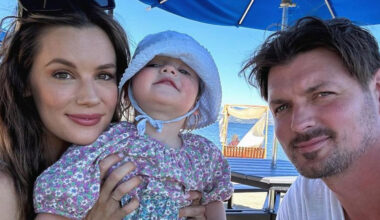
A 2011 photograph shows Nell with a child identified as Eli Essiam Breyer, described in family captions as a grandson of Justice Breyer; the exact relation to Nell is not publicly specified. Financial details about Nell remain private, and while family background suggests relative stability, her professional identity is rooted in art and research rather than in public wealth.
Timeline of Selected Events
| Year | Event |
|---|---|
| circa 1990s | BA, Yale University |
| circa 2000 | MSc, University of Oxford as a Marshall Scholar |
| 2002 | MS, MIT Media Lab completed |
| 2002-2010 | Research affiliate roles at MIT |
| 2006 | Axial View and Volume premiered |
| 2007 | I:move presented |
| 2009 | The Disappearing Woman exhibited at ICA Boston |
| 2011 | Doctorate of Design, Harvard GSD; photographed at MIT 150th project |
| 2022-2023 | Where Lines Converge, Central Synagogue installation |
| 2023 onward | Executive Director, Association of Marshall Scholars; Brooklyn Rail contributions |
Creative Themes
Movement is both medium and message in Breyer’s work. She makes viewers conscious of the bodies around them, of the invisible drafts of urban interiors, and of the way attention can be choreographed. Her art feels like a slow reveal: a map of currents, a diagram of social gravity, a careful experiment in shared perception. Influence flows from minimalist visual art and postmodern choreography, yet her pieces never read as homage alone; they probe thresholds where spectatorship becomes participation.
FAQ
Who is Nell Breyer?
Nell Breyer is an American interdisciplinary artist, choreographer, and scholar whose work interrogates movement, perception, and public space.
What degrees does she hold?
She holds a BA from Yale, an MSc from Oxford as a Marshall Scholar, an MS from MIT Media Lab in 2002, and a Doctorate of Design from Harvard GSD in 2011.
What are some of her notable works?
Notable works include Axial View (2006), Volume (2006), I:move (2007), The Disappearing Woman (2009), and Where Lines Converge (2022-2023).
Has she worked at MIT?
Yes, she was a research affiliate at MIT from about 2002 to 2010 and collaborated with programs that link art and technology.
Is she related to Justice Stephen Breyer?
Yes, she is the daughter of Stephen G. Breyer, born August 15, 1938, who served as an Associate Justice of the U.S. Supreme Court.
Does she have a public social media presence?
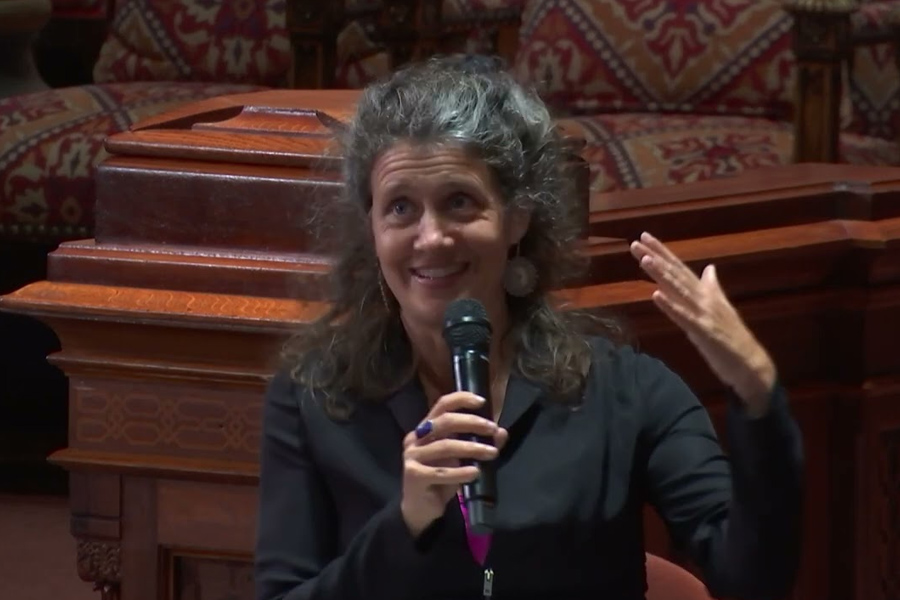
She maintains a low public profile; she contributes to cultural publications and occasionally appears in public talks and installation documentation.
Is there information about her personal life or family?
Her personal life is private; no confirmed public records list a spouse or children, and family images sometimes appear in public archives without detailed explanation.
What themes drive her work?
Her practice centers on making invisible systems visible, engaging audiences in tactile experiments with perception, and blending analog craft with technological inquiry.