A boy who left traces in two places
I keep returning to the odd geometry of Robert Kermitt Baker’s life. Born on a chilly January day in 1918 in Venice, California, he was moved at age three to Kentucky, folded into his father’s family like a letter placed into an envelope. The physical journey is simple to state. The emotional one is not. I find myself thinking about all the things a fifteen year life can contain when you measure it not in achievements but in absence, in the small fractures that widen over time. Robert Kermitt Baker lived where maps and marriage decrees dictated. Yet his story is also a map of absence: a missing eye, an illness that arrives and ends everything, a half sister who became famous and a full sister who carried memory forward.
The visible and the missing in family archives
Archives are honest about some things and coy about others. For Robert there are cemetery entries and family trees that bear his name and dates. They are uneven, like hand-stitched repairs. Some records list him under slightly different spellings. Some place his grave in one county, others place it in another. That inconsistency matters because it reveals how fragile ordinary records can be, how a single life can be diffused across databases and memory. I feel the tug of that discrepancy. It is not a neutral catalogue problem. It is evidence of how whole lives can blur when they leave behind only fragments.
The accident that changed a face
The firecracker that stole Robert’s right eye is the kind of detail that lodges itself in the imagination. It is an instant. It is also a turning point. I do not know what his childhood felt like in the wake of that accident, but I know enough about small towns and family to guess that surviving such an injury shaped his daily life in ways that public records cannot show. The eye becomes a metaphor. It is both the thing that is missing and the witness that remains. An absent eye reframes portraits and alters the way a family tells its own story. For Berniece, his full sister, and for Gladys, his mother, that loss would have been absorbed into the texture of ordinary days.
Tuberculosis as a social absence
When tuberculosis took Robert at age fifteen, it joined the long roster of contagious deaths that shaped early twentieth century America. The disease is a particular kind of silence. It can empty rooms of laughter and leave behind paperwork and burial plots. I think about how families learned to fold these losses into the next generation, how grief moved like a slow current beneath daily routines. The brevity of Robert’s life means there is little to memorialize beyond a name and a date. Yet the way his death intersects with larger histories makes him less an isolated figure and more a hinge in a broader narrative about health, mobility, and family fragmentation.
The half sister everyone knows and the one who remembered
There is a peculiar geometry to celebrity and memory. Marilyn Monroe existed in a bright public plane that Robert could not imagine. They never met. She was born in 1926, the same decade that reshaped this family into separate orbits. Berniece, who grew up with Robert, later became an author of family recollection and a bridge to the later fame of her half sister. I find myself fascinated by the dual tracks of public and private remembrance. One sibling’s life becomes a global storybook. Another’s is preserved in local records and the slow, careful pages of a memoir. If celebrity amplifies, then absence concentrates. Robert’s lack of public narrative compels us to pay closer attention to the small, stubborn facts.
When modern developments nudge old stories
Recent discoveries and public interest have a strange effect on people who are not themselves the subject of attention. As memorabilia and documents related to a famous half sister gained monetary and cultural value, the peripheral family members suddenly matter more to collectors and to historians. That does not change the material past of a teenager who died in 1933. It does, however, fold him into a new set of questions about how families are valued, how objects circulate, and how once-private items are reframed as artifacts. I notice how this revaluation can make the dead feel newly present, and how that presence is mediated by market forces and documentary curiosity.
Photographs, naming mistakes, and the persistence of a nickname
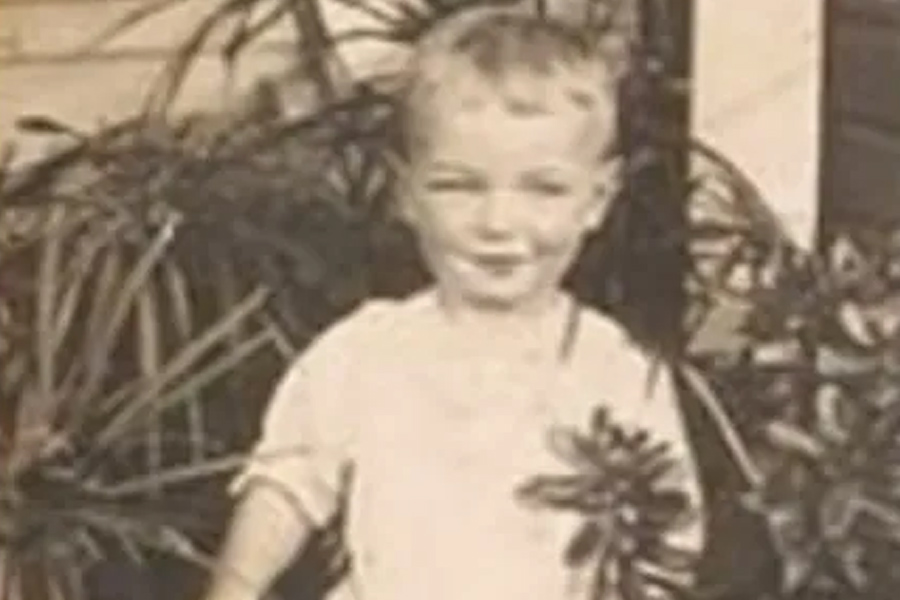
There are a handful of photographs attributed to Robert in various places. They are grainy. Their captions vary. His nickname, Jackie, circulates among family accounts and online mentions. For me these details are not minor. They are the fibers we use to stitch a person back into readable form. A nickname suggests warmth or familiarity. A rare photograph suggests someone who was once held in someone else’s attention long enough to point, to press a shutter, to keep a print. I imagine a photograph tucked into an attic box and then slipping into an online grave directory decades later. That is how ordinary lives survive in the digital age.
The geography of memory
I am struck by the distance between Venice and Kentucky as more than miles. It is a cultural shift, a transfer from seaside promenades to Appalachian rhythms. When people leave, their memory is sometimes left behind in a different place. Robert’s life sits in two geographies: California birth records and Kentucky burial possibilities. That split is emblematic of many American family stories in the early twentieth century. People drifted, separated by divorce and by necessity. Families reassembled themselves in the patchwork ways they could. The result is a biography that cannot be told cleanly along a single line.
FAQ
Who were Robert Kermitt Baker’s immediate family?
Robert Kermitt Baker was the son of Gladys Pearl Baker and Jasper Newton Baker. He had a full sister, Berniece, and a half sister, known to history as Marilyn. These relationships are simple on paper and complex in lived reality.
Did Robert Kermitt Baker ever meet his half sister Marilyn?
No. Robert died years before Marilyn reached adulthood. Their lives did not intersect in time, though later narratives about family connected them across decades.
Where is Robert Kermitt Baker buried?
Public records and cemetery listings show his name and dates, but they vary on the exact burial location. The discrepancies in county and plot information mean that his final resting place is listed differently across sources. That variation is part of how fragmented family archives can be.
Is there a photograph of Robert Kermitt Baker?
A few images circulate widely, often labeled with slight differences in spelling and caption. The photographs are rare and not numerous. They function as delicate witnesses rather than full portraits.
Did Robert Kermitt Baker leave any estate or notable possessions?
There is no record of a personal estate tied to him in the public narratives that survive. His life ended too young to accumulate material legacy. Instead his legacy exists in family memory and in the way his brief presence influences the stories told by those who survived him.